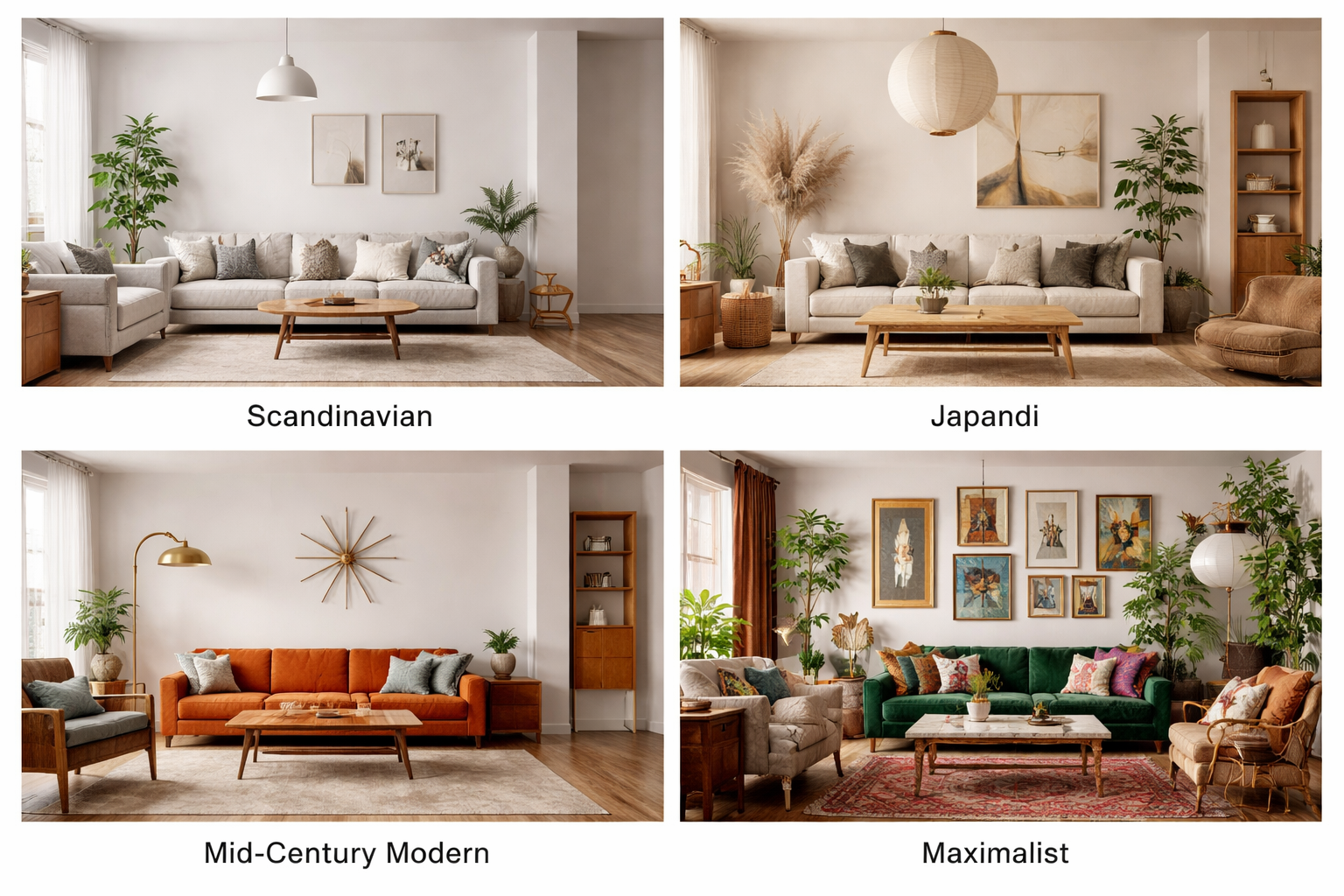
Scandinavian; Japandi; Mid-century modern; Maximalist; If you’ve spent any time looking at interiors online, you’ve probably encountered these labels — and possibly felt slightly overwhelmed by them.
Here’s the thing: you don’t need to pick one and commit to it forever. Interior design styles are not rules. They’re a vocabulary — a shared language for describing the kinds of spaces that feel right to you. And once you understand the language, it becomes much easier to communicate what you want, make confident choices, and avoid the feeling of a home that’s ‘almost there’ but not quite.
This guide covers eight of the most popular styles you’ll encounter as a homeowner. For each one, we’ll explain what defines it, what it feels like to live in, and what kind of furniture suits it best. By the end, you should have a clearer sense of your own taste — even if it turns out to be a blend of several.
The eight styles worth knowing
Scandinavian
Keywords: light, functional, warm, uncluttered
Scandinavian design emerged from the Nordic countries in the early twentieth century, shaped by long winters, limited daylight, and a cultural emphasis on craftsmanship and practicality. At its core, it’s about making a home feel warm and liveable without excess.
The palette is light: whites, soft greys, warm creams, and natural wood tones. Furniture is simple in form but considered in detail — clean lines, quality materials, nothing superfluous. Textiles play an important role: wool throws, linen cushions, and layered rugs add softness without clutter.

Scandinavian interiors work especially well in homes with good natural light. They’re forgiving for renters and owners alike, and they age well. If your instinct is ‘calm, light, and easy to live in,’ this is likely part of your aesthetic.
Furniture to look for: solid wood dining tables with tapered legs, upholstered sofas in neutral linens, open shelving in oak or ash, simple storage that earns its place.
Japandi
Keywords: restrained, tactile, meditative, crafted
Japandi is a modern name for a design sensibility that has long existed—the harmonious blend of Japanese wabi-sabi, which celebrates imperfection and transience, with Scandinavian interiors known for their warmth and comfort. The result is a style that feels calm, intentional, and thoughtfully curated.
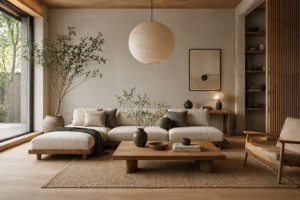
Colours are muted and earthy: charcoal, clay, sage, off-white, dark walnut. Furniture sits low to the ground and is made from natural materials with visible texture — grain, weave, patina. There is very little decoration for its own sake; every object in a Japandi interior is either useful or genuinely beautiful.
This style rewards restraint. It’s not about having fewer things because you can’t afford more — it’s about choosing fewer things with more care. If you find yourself gravitating toward handcrafted objects, natural textures, and spaces that feel peaceful rather than busy, Japandi is worth exploring.
Furniture to look for: low-profile bed frames in dark wood, handcrafted ceramics, linen sofas in deep neutrals, joinery with visible craft.
Mid-century modern
Keywords: iconic, warm, optimistic, timeless
Mid-century modern refers to design produced roughly between 1945 and 1969 — a period defined by post-war optimism, new materials, and a belief that good design should be accessible. It’s one of the most enduring styles in interior design, and for good reason: it balances form and function with an ease that few other periods have matched.
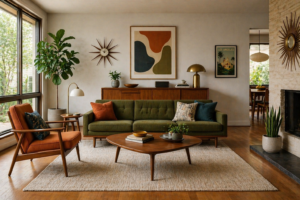
The palette mixes warm neutrals with deliberate accent colours: mustard, terracotta, olive green, burnt orange. Furniture has organic curves, tapered legs, and is made from materials like walnut, teak, and moulded plywood. There’s a playfulness to it that other minimalist styles often lack.
Mid-century modern works particularly well in period properties and homes with strong architectural bones. It’s also one of the easier styles to mix with contemporary pieces — a well-chosen vintage armchair can anchor an otherwise modern room.
Furniture to look for: tulip-style dining chairs, credenzas in teak or walnut, statement sofas with low backs and tapered wooden legs, Anglepoise-style lighting.
Industrial
Keywords: raw, honest, urban, textured
Industrial style draws on the aesthetics of factories, warehouses, and workshops: exposed brickwork, steel beams, raw concrete, and the beauty of materials left unfinished. It emerged as a design movement when city-dwellers began converting commercial spaces into homes and found they preferred the character of the original architecture to anything added on top of it.
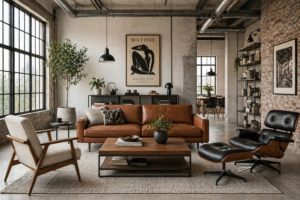
The palette is dark and earthy: charcoal, rust, dark brown, aged brass, raw steel. Furniture is heavy and honest — reclaimed wood, welded metal, leather worn to a patina. There’s nothing precious about an industrial interior; it’s designed to be lived in hard.
This style suits homes with architectural features worth celebrating: original beams, brick walls, large factory-style windows. It’s harder to achieve in a new-build without those bones, though carefully chosen furniture and lighting can go a long way.
Furniture to look for: reclaimed wood dining tables, steel-framed shelving, leather sofas in dark cognac or black, pendant lighting in raw metal or aged brass.
Contemporary
Keywords: clean, confident, current, uncluttered
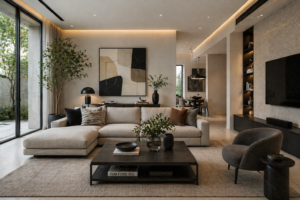
Contemporary design is sometimes confused with minimalism, but the two are distinct. Minimalism is a philosophy — less is a deliberate statement. Contemporary is simply what good design looks like right now: clean lines, quality materials, an absence of unnecessary ornament, and a confidence in letting the space itself do the work.
Palettes tend toward neutrals — white, stone, taupe, black — with texture doing more work than colour. Furniture has strong, simple silhouettes and is made to last. There’s a premium feel to contemporary interiors that comes not from expense but from coherence: everything belongs, and nothing jars.
Contemporary style is the most versatile of the eight styles here. It works in almost any property type and provides a strong foundation for layering in personal touches over time.
Furniture to look for: modular sofas in stone or charcoal, solid wood or stone dining tables, handleless cabinetry, statement lighting with clean geometric forms.
Maximalist
Keywords: layered, personal, bold, collected
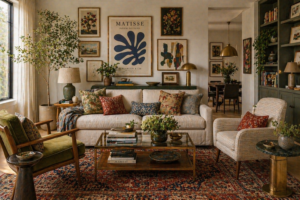
Maximalism is not the absence of design thinking — it’s a different kind of it. Where minimalism edits down, maximalism layers up: rich colours, pattern mixing, collections of objects, textiles on every surface. Done well, a maximalist interior feels like a portrait of the person who lives in it.
The palette can be almost anything — jewel tones, warm reds, deep greens, gold accents. The key is intentionality: maximalism that works is curated, not cluttered. Every pattern has a relationship with the others. Every object has been chosen, not accumulated.
This style rewards personality and confidence. It’s not for everyone — but if you find sterile, neutral interiors cold and uninviting, and you’re drawn to spaces that feel rich and full of story, maximalism might be closer to your instincts than you realise.
Furniture to look for: statement sofas in velvet or patterned fabric, bold dining chairs in contrasting colours, freestanding bookshelves used as room dividers, antique or vintage pieces mixed with contemporary.
Coastal and organic
Keywords: relaxed, natural, airy, tactile
Coastal and organic design shares a sensibility: bringing the outside in, using materials and colours that reference the natural world, and creating spaces that feel easy and unforced. Coastal leans toward the sea — bleached wood, sandy tones, woven textures, salt-washed blues. Organic design is broader, drawing on any natural environment: forest, desert, meadow.
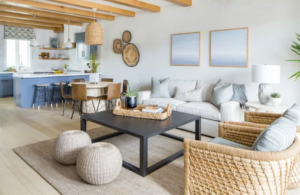
Both styles favour natural materials — rattan, jute, linen, stone, unfinished wood — over synthetic ones. They avoid anything that feels overly polished or designed. The goal is a home that feels like it has always been there, that belongs to its landscape.
These styles work particularly well in homes with garden access, good views, or rooms that receive strong natural light. They’re also well-suited to holiday homes and spaces designed for relaxation.
Furniture to look for: rattan or cane armchairs, linen sofas in warm white or sand, solid oak or elm dining tables, woven storage baskets, statement indoor plants.
Traditional and classic
Keywords: elegant, enduring, layered, considered
Traditional interiors draw on the design vocabulary of earlier periods — Georgian symmetry, Victorian richness, Arts and Crafts. They value formality, permanence, and the sense that a room has been assembled over time rather than delivered in a single van.
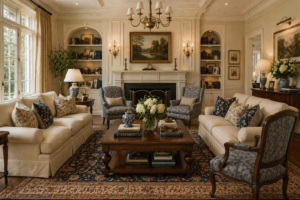
Palettes tend to be rich and warm: deep greens, burgundy, navy, cream, aged gold. Furniture is substantial — proper upholstery, carved wood details, quality joinery. Rooms feel considered rather than casual, and there’s often a strong sense of hierarchy: a focal point (a fireplace, a piece of art), with everything else arranged in relation to it.
Traditional style is well-suited to period properties where it complements the architecture. It’s also increasingly popular as a counterpoint to the ubiquity of minimalism — a deliberate choice of warmth, detail, and permanence over restraint.
Furniture to look for: button-back sofas and armchairs, solid hardwood dining tables, freestanding bookshelves, heritage fabrics in wool or velvet, handmade pieces with visible joinery.
You don’t have to pick just one
The most interesting homes are rarely the result of strict adherence to a single style. They’re the result of someone who understands what they like — who has a clear enough sense of their own taste to make choices that feel coherent even when they draw from different traditions.
Japandi and Scandinavian sit naturally together. Mid-century and contemporary often share a room without friction. Industrial and maximalist can make for a compelling combination when handled with confidence. The label matters far less than the underlying question: does this piece feel right in this space, for the life I actually live?
The value of knowing these styles is not that you can pick one and follow it like a rulebook. It’s that you can see your own preferences more clearly, describe them more precisely, and make choices — including furniture choices — that feel genuinely yours.
Know your style. Now find your furniture.
Once you have a clearer sense of what you’re drawn to, the next step is finding furniture that actually delivers on it — not a compromise between your taste and whatever happens to be in stock, but pieces made specifically to suit your style, your space, and the way you live.
→ Browse our collection — see how our handmade furniture translates across different interior styles.
The homes that feel most ‘you’ aren’t the ones that followed a trend. They’re the ones where every choice was made on purpose.